
Spaccanapoli: The City’s Most Famous Street (550 mt):
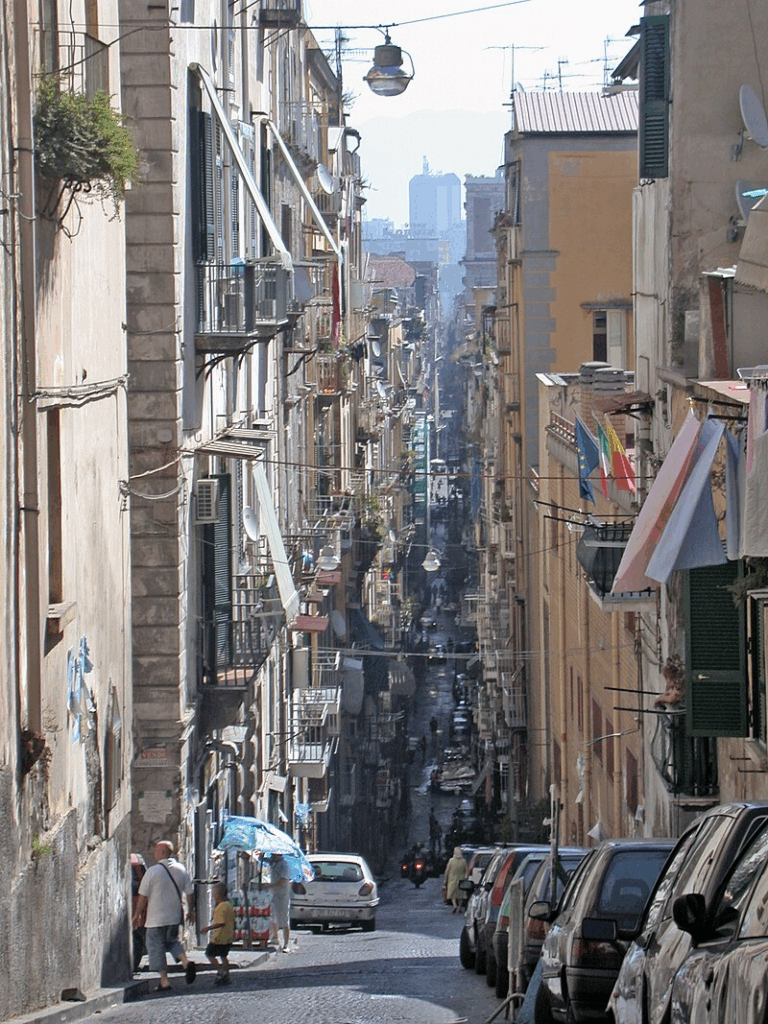
This is one of Naples’ most characteristic streets, dotted with bars, pizzerias, and traditional restaurants, along with stalls offering all kinds of handmade crafts and unique shops. As you walk along, you’ll likely come across various street artists playing traditional Neapolitan instruments or performing humorous sketches in curious costumes. Here, you might even earn an instant “degree” from the “University of Mathematics” or witness a performance by the Pazzariello, a typical figure from local tradition.
Spaccanapoli’s importance is rooted in its history, as it was one of the main thoroughfares of ancient Neapolis, founded in 580 B.C.
Walking along the street, you’ll encounter 17 palaces and 14 churches. The area surrounding Spaccanapoli brings together several points of interest, such as the Gesù Nuovo church, the monumental complex of Santa Chiara with its exceptional Majolica Cloister, the Sansevero Chapel, and the Basilica of San Lorenzo Maggiore.
https://maps.app.goo.gl/MYJ6VgV1m5vfuuKR7
Duomo and Museum of the Treasure of San Gennaro (950 mt):
Tucked away among the buildings, the Naples Cathedral is the heart of Neapolitan spirituality. It’s here that the famous “miracle” of the liquefaction of San Gennaro’s blood takes place.
The building features a simple, neo-Gothic facade with three entrances. Inside, you’ll find three naves, 100 meters long and 48 meters high, where various architectural styles—Gothic, Baroque, and neo-Gothic—are intertwined. One of the cathedral’s most important areas is the Chapel of the Treasure, a Baroque space that houses over 50 silver figures donated by wealthy devotees.
The most unique element of the Duomo is the ampoules containing the blood of San Gennaro. The blood is famous because, during specific celebrations (the first Sunday of May, September 19th, and December 16th), it changes from a solid to a liquid state.
From the Chapel of the Treasure, you can access the Museum of the Treasure of San Gennaro, an exceptional collection of jewelry, statues, busts, and precious textiles. Among the most significant pieces are the Mitre of San Gennaro, a bishop’s headpiece adorned with 3,694 precious stones (3,328 diamonds to represent the hardness of faith, 168 rubies for the saint’s blood, and 198 emeralds for knowledge), weighing a total of 18 kg. The mitre is completed with two infule (lappets) decorated with engravings of the ampoule of San Gennaro.
Also exceptional is the Necklace of San Gennaro, a chain crafted between 1679 and 1929 (about 250 years) through the addition of precious stones and jewels gifted by sovereigns, popes, nobles, and common people to the original piece created by the goldsmith Michele Dato. Finally, the insignia of the Order of San Gennaro—a pin, a plaque, and a cloak—are studded with gems, enamels, precious stones, and decorations of the Bourbon lily. These are part of the original regalia of the Illustrious and Royal Order of San Gennaro, founded in 1738 by Charles III of Bourbon
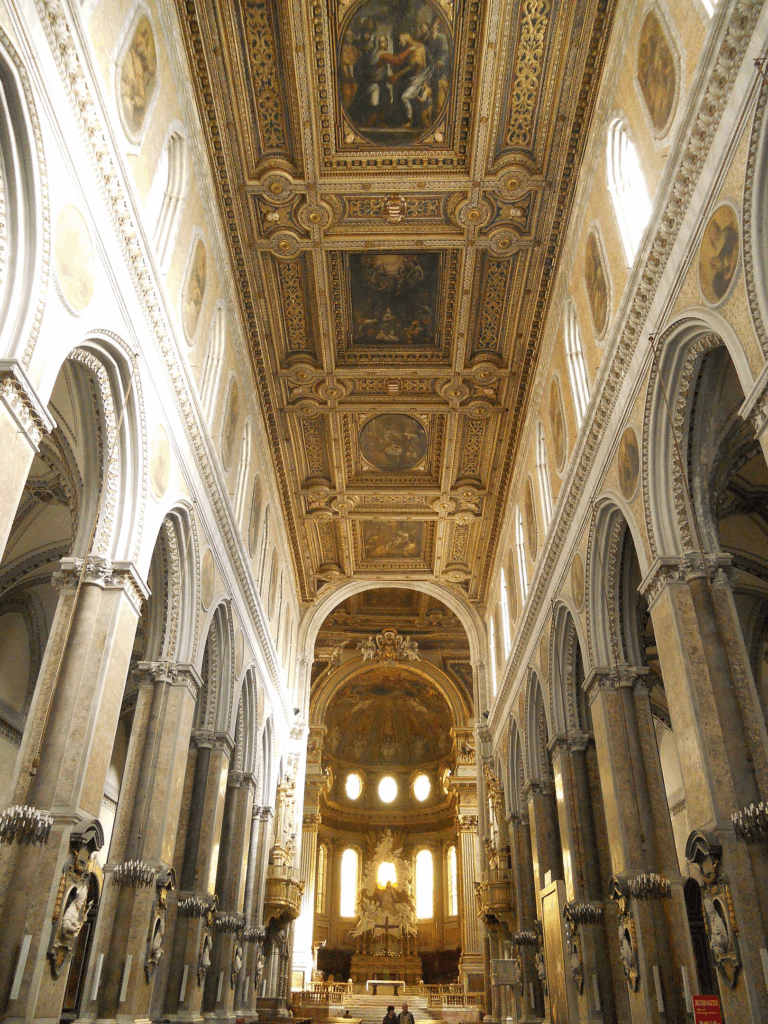
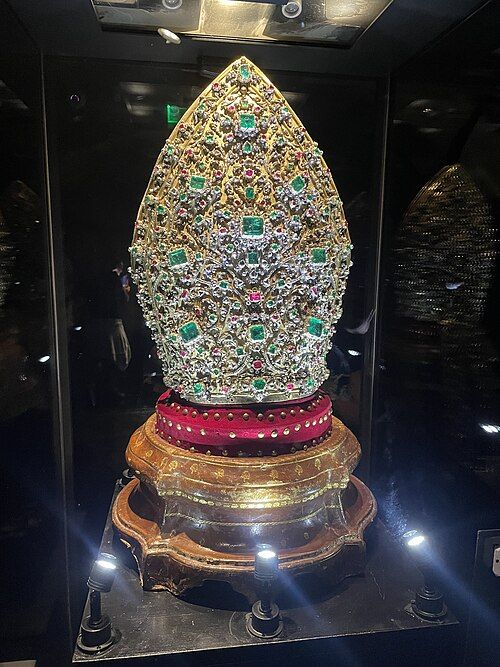
Immagine dell’interno del Duomo di Napoli di Baku, rilasciata sotto licenza Creative Commons Attribuzione-Condividi allo stesso modo 3.0
Immagine della Tiara di San Gennaro di Photo2023, rilasciata sotto licenza Creative Commons Attribuzione 4.0 Internazionale
https://maps.app.goo.gl/iuomS2KpzTdsDxn46
San Gregorio Armeno: The Beating Heart of Naples and Its Nativity Scene Traditions (1.2 km):
Welcome to San Gregorio Armeno, much more than just the “street of nativity scenes.” This is the true beating heart of Naples, an alley steeped in history, art, and unique traditions.
Its origins date back to the Roman era, when a temple dedicated to the goddess Ceres, the goddess of fertility, stood here. In her honor, devotees would bring small terracotta statues, planting the seed for the first artisan workshops. However, the true tradition of handmade figurines for the Neapolitan nativity scene blossomed in the 18th century, reaching levels of artistic excellence recognized worldwide.
Even today, as you stroll through San Gregorio Armeno, you can feel a perpetual Christmas atmosphere. The artisan workshops, open year-round, display a myriad of figurines for the nativity scene, from the sacred characters of the Nativity to caricatures of politicians, actors, and other contemporary celebrities, demonstrating the lively irony and creativity of Neapolitan culture.
But San Gregorio Armeno is not just about craftsmanship. In the heart of the neighborhood stands the majestic Monastery of San Gregorio Armeno. A visit to its cloister is a must-do experience, with its elegant Baroque marble fountain at the center, flanked by an ancient well rich with history. Inside the monastery, your eyes will be captivated by the sumptuous coffered ceiling created by the painter Teodoro d’Errico and the splendid frescoes by Luca Giordano, among which “The Glory of San Gregorio” stands out
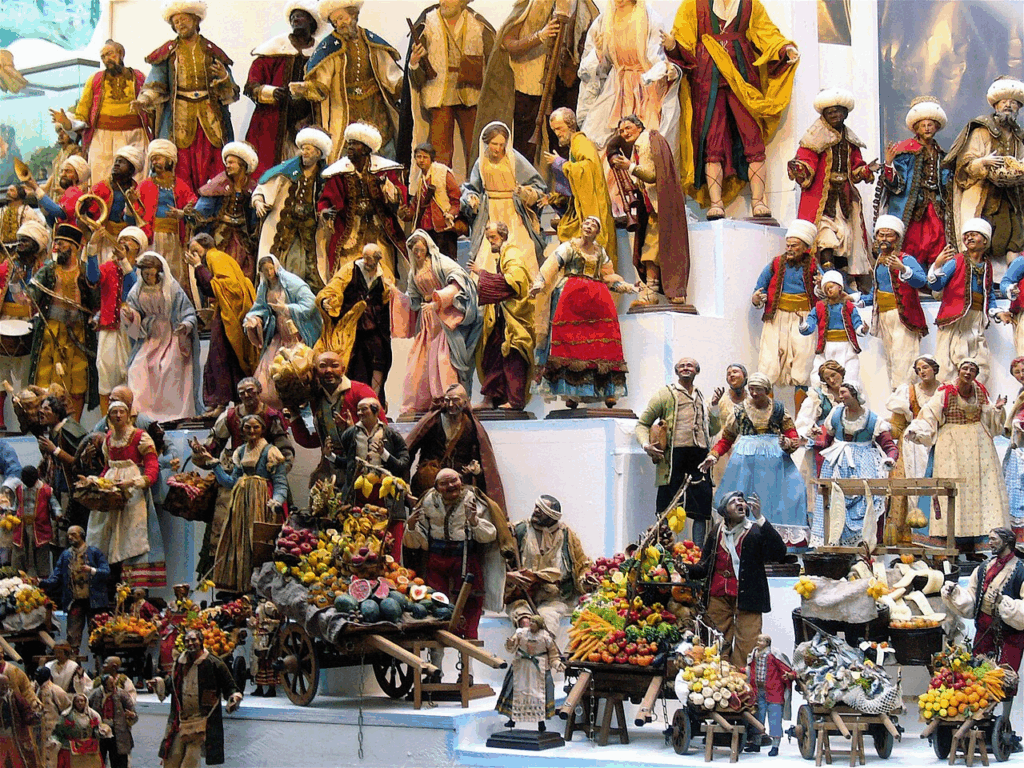
Immagine di Raffaella from Napoli , rilasciata sotto licenza CC BY-SA 2.0
https://maps.app.goo.gl/zynoCJ8YXmsRpFQw7
Sansevero Chapel Museum and the Veiled Christ (1.4 km):
The Sansevero Chapel, also known as the Church of Santa Maria della Pietà or Pietatella, is one of the most important museums in Naples. Located near Piazza San Domenico Maggiore, this deconsecrated church is next to the family palace of the princes of Sansevero, separated by a narrow alley that was once topped by a suspended bridge. This bridge allowed family members to access the place of worship privately.
The chapel houses masterpieces such as Giuseppe Sanmartino’s Veiled Christ, renowned worldwide for its marble veil that seems to rest on the dead Christ, Antonio Corradini’s Modesty, and Francesco Queirolo’s Disillusion. As a whole, it is a unique and deeply symbolic complex. It also holds numerous other works of fine craftsmanship or unusual pieces, like the Anatomical Machines—two fully skeletonized bodies where you can see the entire circulatory system in great detail.
While it was conceived as a place of worship, the mausoleum is primarily a Masonic temple rich with symbolism, reflecting the genius and charisma of Raimondo di Sangro, the seventh Prince of Sansevero. He was both the patron and the mastermind behind the chapel’s 18th-century artistic design.
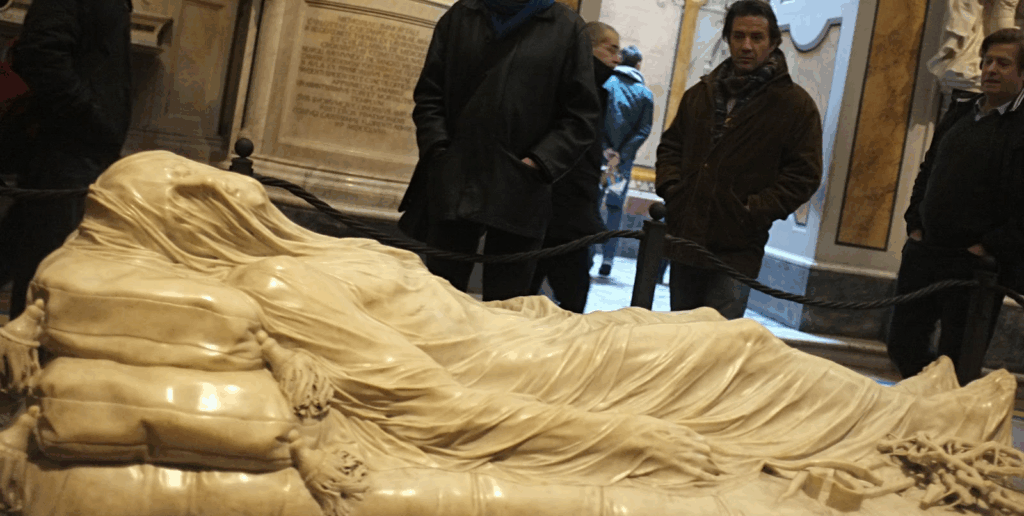
Immagine di David Siirlyer, rilasciata sotto licenza CC BY-SA 2.0
https://maps.app.goo.gl/3Yh4VFc1YeRYiAUS7
National Archaeological Museum (MANN) (1.6 KM):
Considered one of the most important archaeological museums in the world, the National Archaeological Museum of Naples houses an extraordinary collection of artifacts from Pompeii, Herculaneum, and other significant sites of Magna Graecia. The museum also boasts an exceptional section dedicated to Ancient Egypt.
Don’t Miss
- Villa of the Papyri: Priceless artifacts from the famous villa in Herculaneum, including carbonized papyri and sculptures that once decorated the residence.
- Farnese Collection: A treasure trove of classical sculptures, including:
- The Farnese Bull: A monumental sculpture depicting the punishment of Dirce, among the largest ancient works to have survived.
- The Venus of Capua: A splendid statue that embodies the ideal of beauty and harmony.
- Artifacts from Pompeii and Herculaneum: A fascinating testament to the daily life and art of the Vesuvian cities, tragically buried by the eruption of 79 AD.
- Mosaics and Frescoes: Extraordinary paintings that once adorned homes and public buildings, vividly preserving scenes of life, myths, and landscapes.
- Objects of Daily Life: Tools, utensils, pottery, and household items that offer a valuable glimpse into Roman civilization.
- Egyptian Section: An immersion into the millennia-old Egyptian civilization through a rich collection of statues, sarcophagi, mummies, and artifacts that showcase its influence in the ancient world.
- Roman Campania: A section dedicated to sculptures and paintings from public and private buildings in the ancient Campania region.
- Secret Cabinet: A unique collection of artifacts that explore the theme of sexuality in ancient Rome, offering a more complete perspective on the culture of the time.
- Numismatics and Gems: A large collection of ancient coins from various periods and precious engraved gems.
- Model of Pompeii: A detailed scale model that reconstructs the appearance of the city of Pompeii before the devastating eruption.

Immagine di Mister No, rilasciata sotto licenza Creative Commons Attribuzione 3.0 Unported
https://maps.app.goo.gl/1MUE6at127tWjZuH6
Maschio Angioino (2,5 km) :
An imposing medieval and Renaissance fortress that dominates the city’s port. Be amazed by its majesty, elegant halls, and towers that offer breathtaking views of Naples and its bay. It’s a journey into the history of Naples and its ancient rulers.
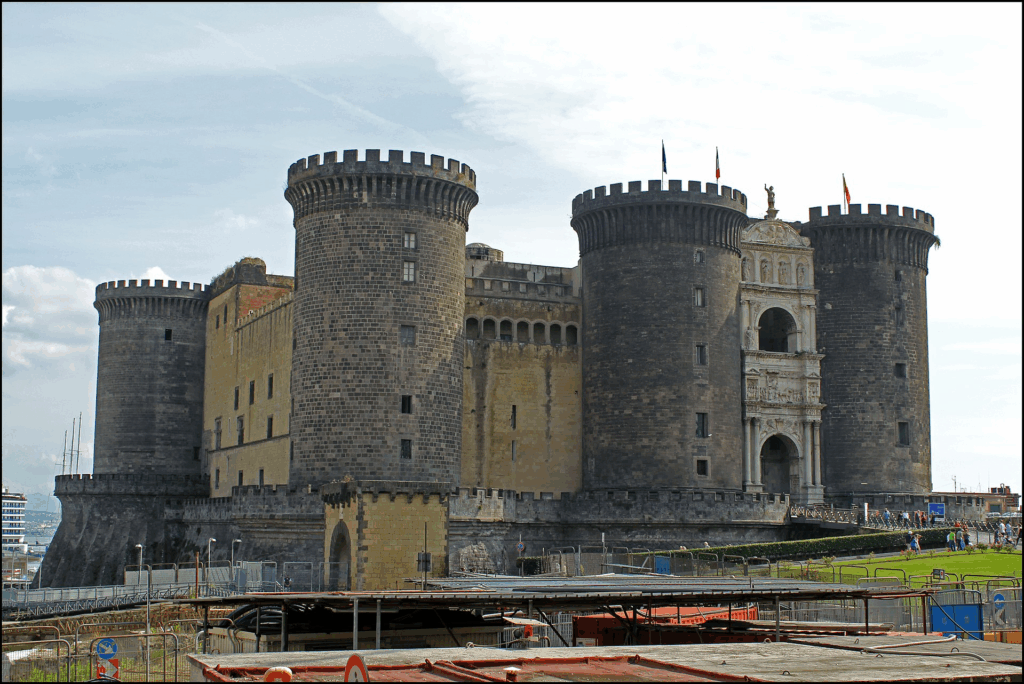
Immagine di Richard Nevell, rilasciata sotto licenza CC BY-SA 2.0
https://maps.app.goo.gl/zdL9VtTwLE6tiVDL9
Royal Museum and Capodimonte Wood (2.5 km):
An oasis of greenery that holds an invaluable treasure of art. From suits of armor to paintings by great Italian masters like Titian and Caravaggio, immerse yourself in beauty and history within an enchanting natural setting. It’s the perfect spot for a relaxing walk and a cultural discovery.

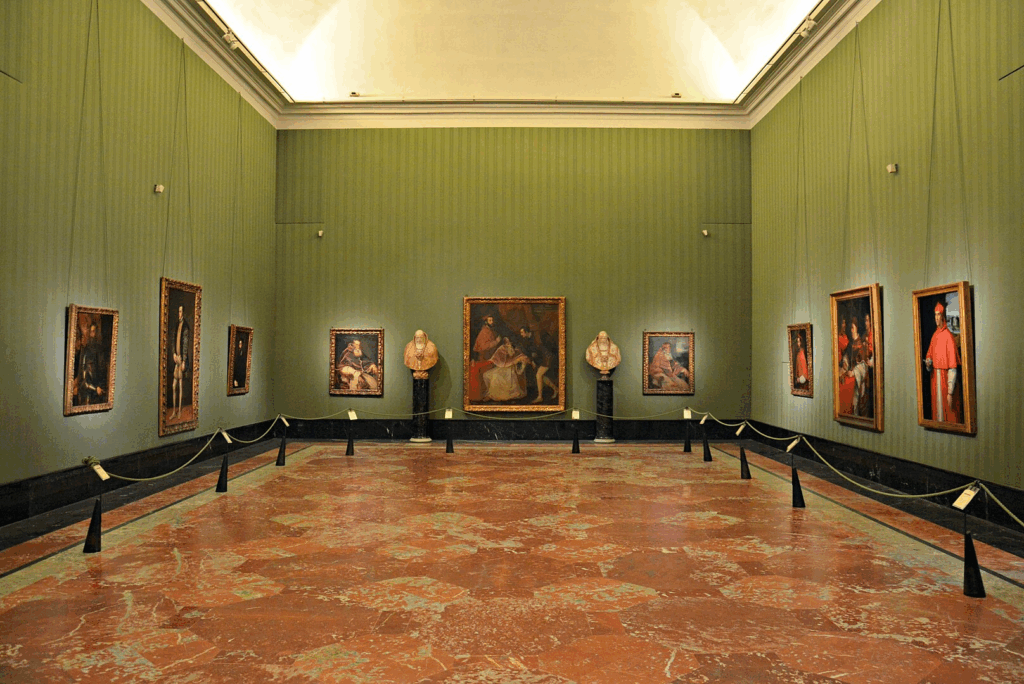
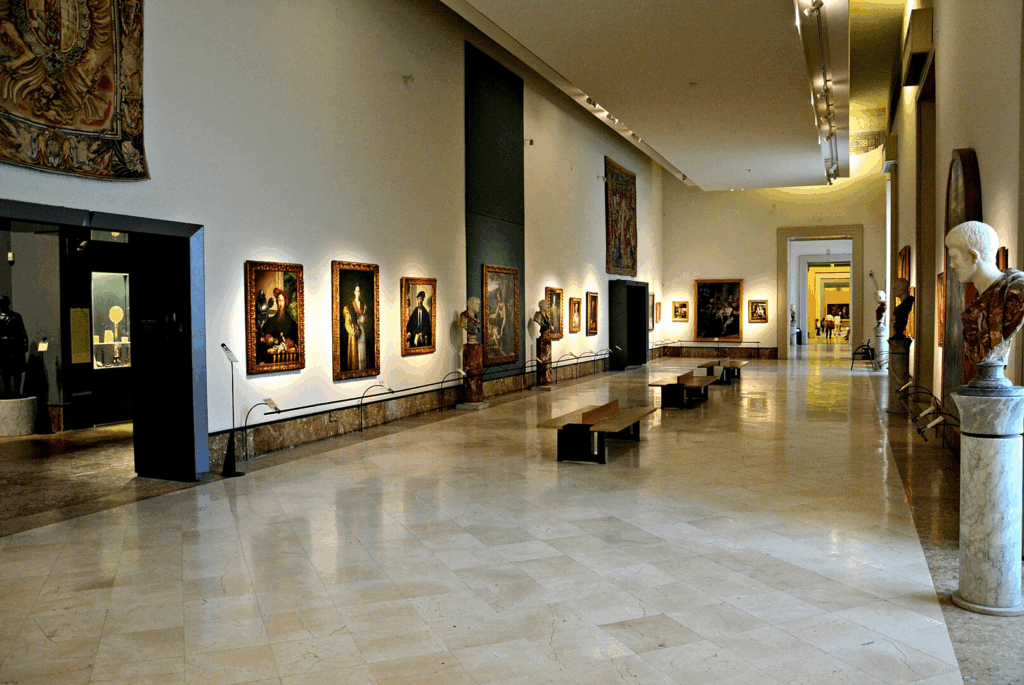
Immagini di Mentnafunangann, rilasciata sotto licenza Creative Commons Attribuzione 4.0 Internazionale
https://maps.app.goo.gl/BNoJahJHcENSCQ3J9
Galleria Umberto I (2,6 km) :
An elegant crossroads of history, architecture, and Neapolitan vibrancy. Admire its majestic glass and iron dome and decorated floors, and soak up the lively atmosphere of its cafes and shops. It’s a true 19th-century gem.
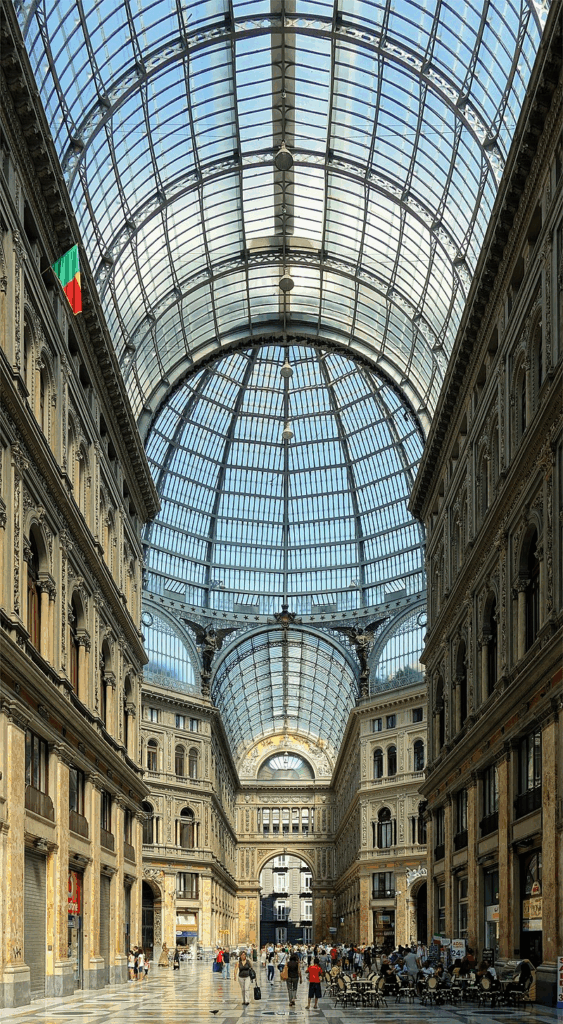
Immagine di Velvet, rilasciata sotto licenza Creative Commons Attribuzione 3.0 Unported
https://maps.app.goo.gl/84gPo3gPGU9dR6GR6
Royal Palace of Naples (2.8 km):
A historical residence of the rulers of Naples, this is a journey through centuries of opulence and power. Explore its lavish apartments, magnificent halls, and royal gardens, imagining the lives of kings and queens. It’s an immersive experience into the grandeur of the past.

Immagine di Sordelli, rilasciata sotto licenza Creative Commons Attribuzione 3.0 Unported
https://maps.app.goo.gl/27A31N7WMBwsEKiK6
Catacombs of San Gennaro (3 km):
An enchanting journey into Naples’ underground, exploring ancient Christian necropolises rich in history and art. Walk through the atmospheric tunnels and admire the frescoes that bear witness to the faith and culture of the early Christian communities. It’s a unique and moving experience.
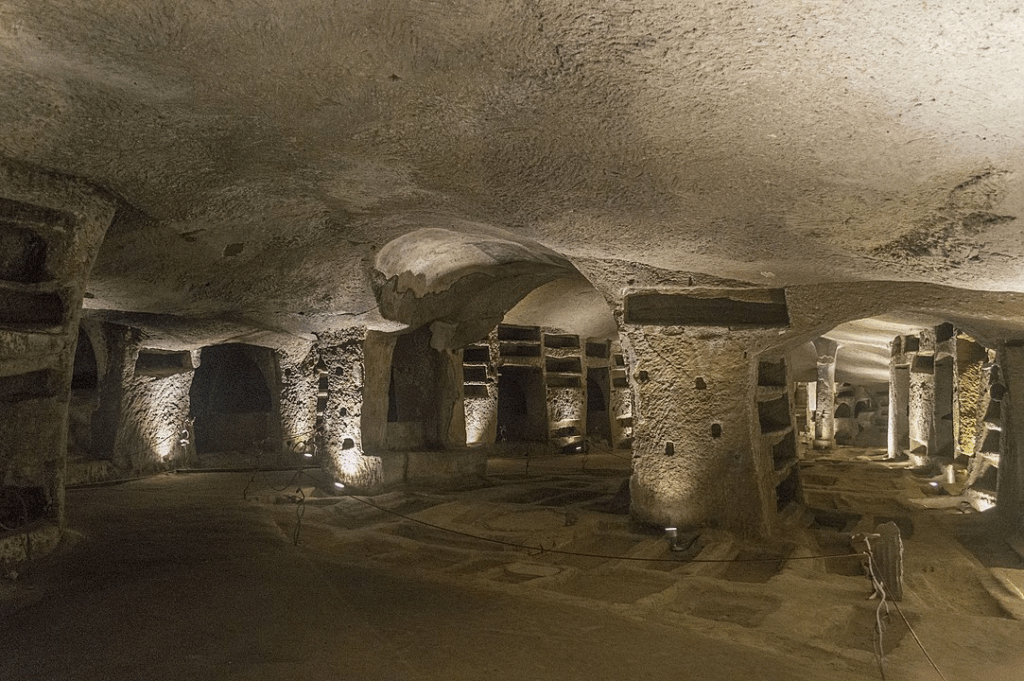
Immagine di Dominik Matus, rilasciata sotto licenza Creative Commons Attribuzione 4.0 Internazionale
https://maps.app.goo.gl/VyZdg14KRst6x8BN6
Bourbon Tunnel (3 km):
An incredible underground labyrinth that reveals another side of Naples. This ancient tunnel, built for military purposes and later used as an air-raid shelter, now offers a fascinating journey through history, engineering, and even the remains of vintage cars. It’s an adventure into the city’s hidden heart.
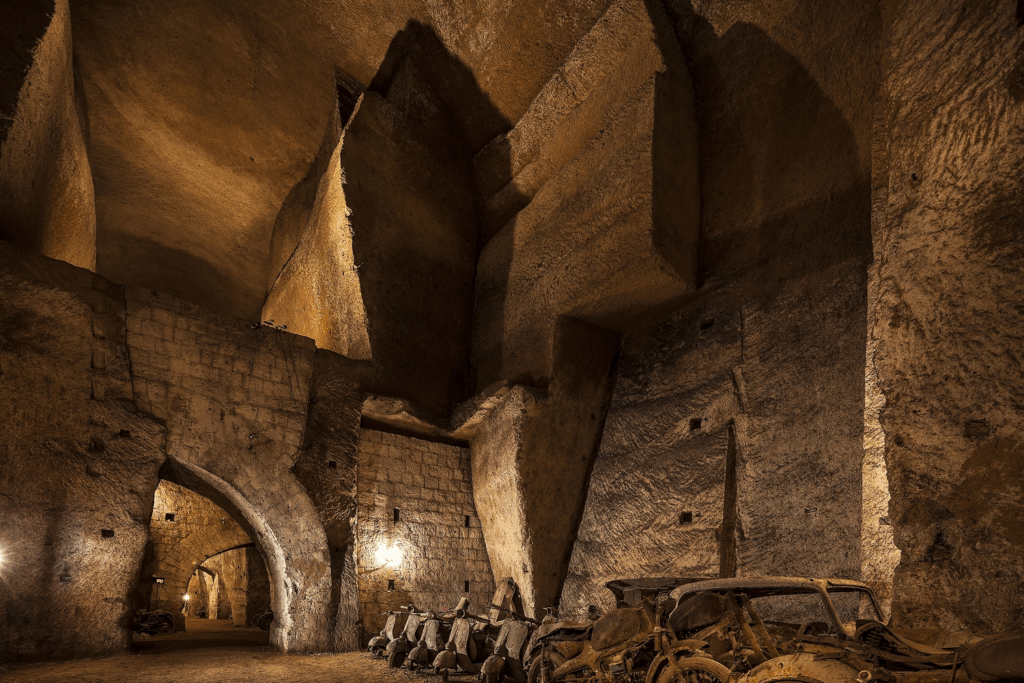
Immagine di Associazione Culturale Borbonica Sotterranea, rilasciata sotto licenza Creative Commons Attribuzione 4.0 Internazionale
https://maps.app.goo.gl/1gmf26gfBfhLqoVE9
Piazza del Plebiscito (3,2 km) :
An iconic and monumental square, it’s a symbol of Naples and the stage for significant historical events. Admire the grandeur of the Royal Palace and the Basilica of San Francesco di Paola, and let yourself be enveloped by its vibrant atmosphere. It’s an ideal spot for a walk and for taking memorable photos.
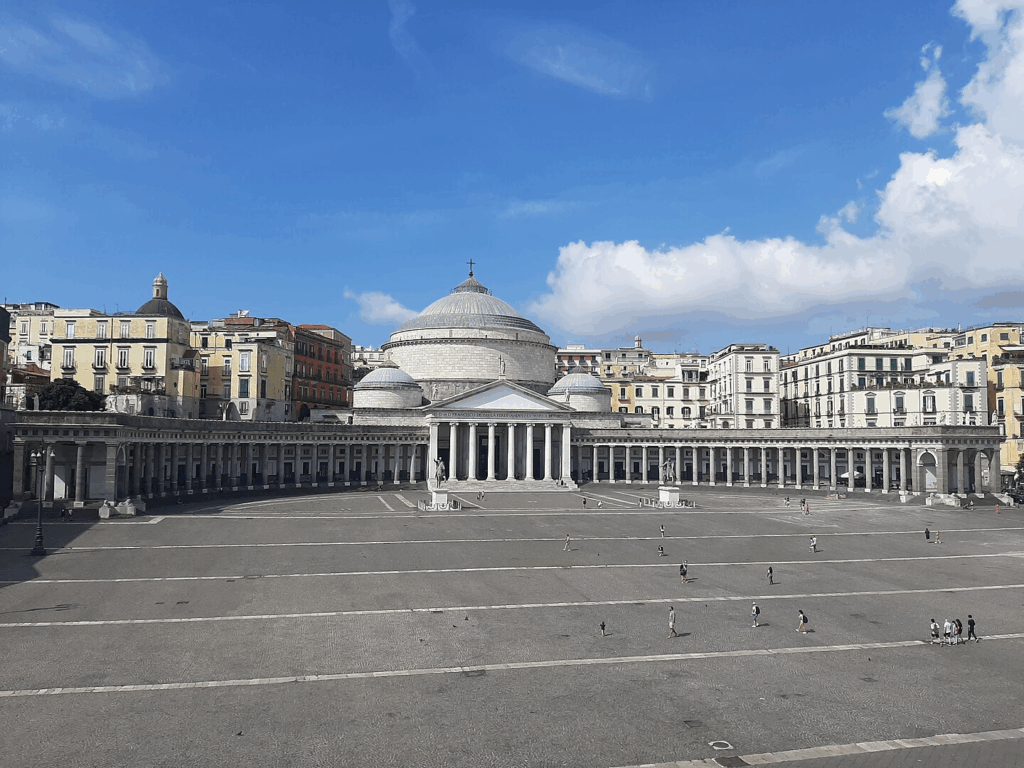
Immagine di Baku, rilasciata sotto licenza Creative Commons Attribuzione 4.0 Internazionale
https://maps.app.goo.gl/qS9xQTFjJ8pDQMMR7
Castel dell’Ovo (3,8 km) :
A castle with legendary origins, located on an islet connected to the mainland by a picturesque causeway. Enjoy the panoramic views of the bay, explore its ancient walls, and breathe in the millennia of history in this enchanting place.
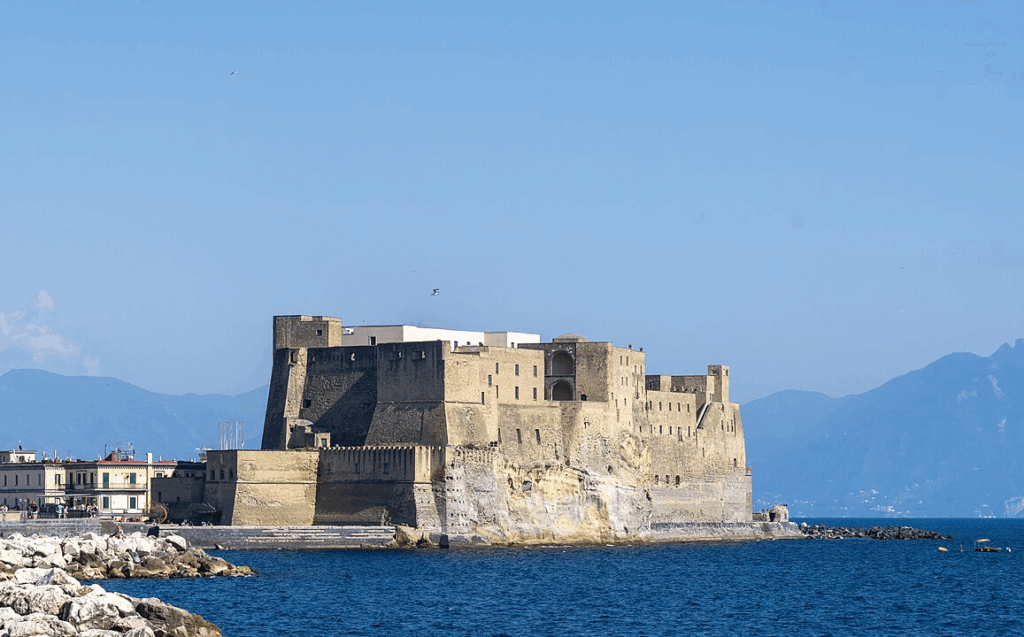
Immagine di PaestumPaestum, rilasciata sotto licenza Creative Commons Attribuzione 4.0 Internazionale
https://maps.app.goo.gl/VP4KNTonutBY75nn7
Bosco Camaldoli (8 km) :

https://maps.app.goo.gl/dBHFKFBHebXH8ccF8
Herculaneum Archaeological Site (9 km):
Just a short distance from Naples, immerse yourself in history with a visit to this ancient Roman town, beautifully preserved by volcanic ash from the eruption of Vesuvius. Walk through its streets, admire the houses, baths, and mosaics, and relive the daily life of two thousand years ago. It’s an unforgettable archaeological experience.
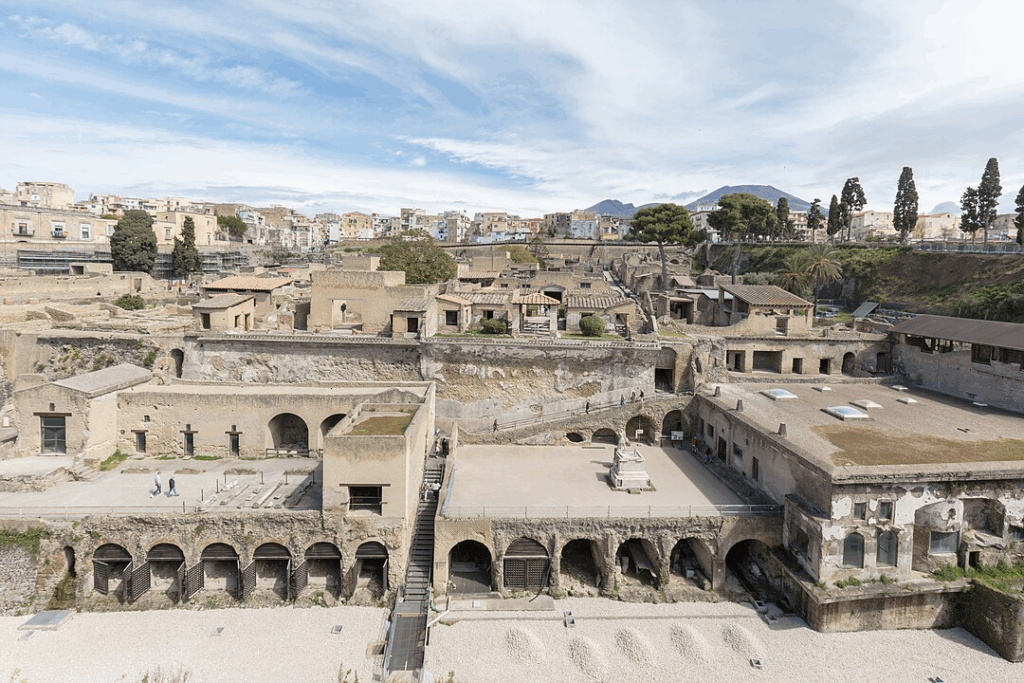
Immagine di Diego Delso, rilasciata sotto licenza Creative Commons Attribuzione 4.0 Internazionale
https://maps.app.goo.gl/z9Enia7ozEVmRyQE6
Flavian Amphitheater (19 km):
Just a short drive from Naples, discover one of Italy’s largest Roman amphitheaters, second only to the Colosseum. Imagine the gladiatorial shows that once filled this imposing space and let yourself be transported back in time. It’s a significant testament to the grandeur of the Roman Empire.
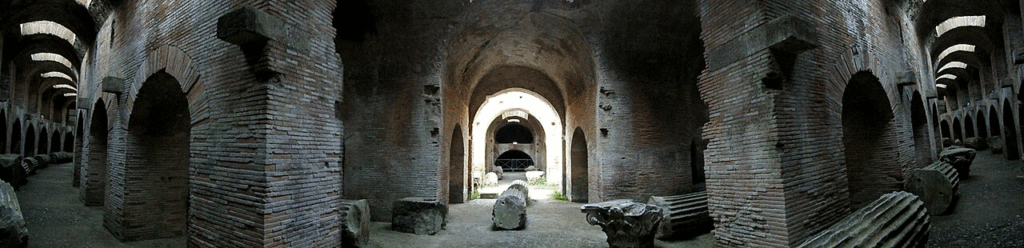
Immagine di Mattia Luigi Nappi, rilasciata sotto licenza Creative Commons Attribuzione 3.0 Unported